
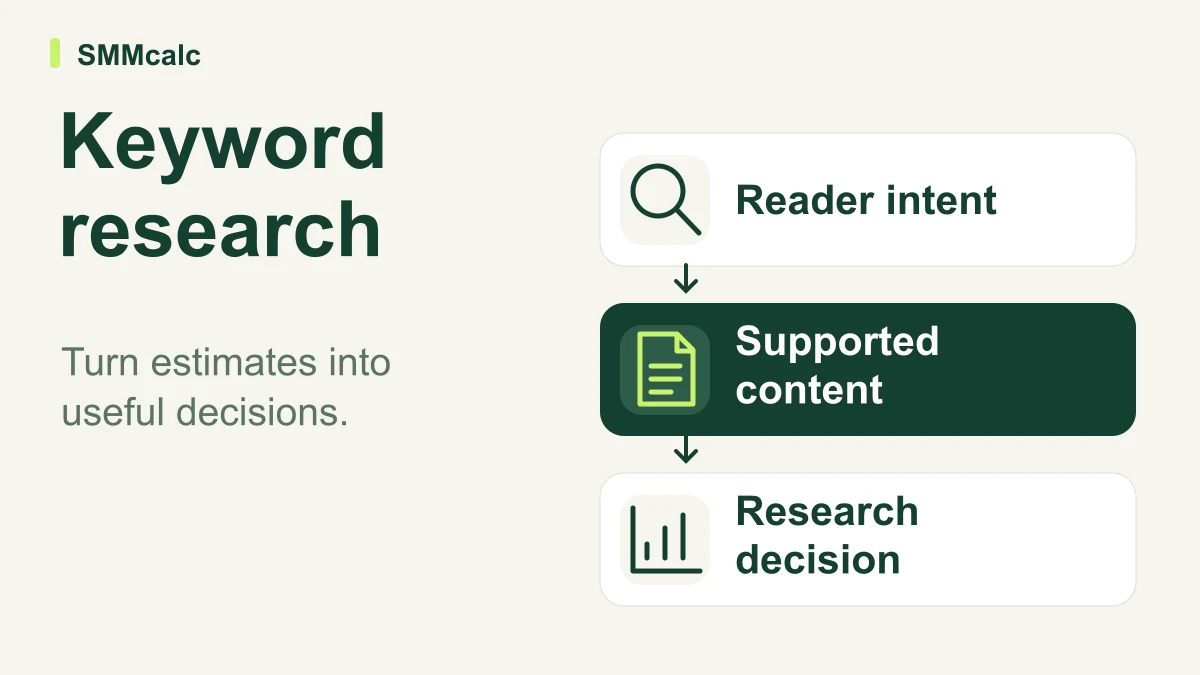
Keyword research software should improve a content decision, not simply produce a larger spreadsheet. Use volume and difficulty as estimates alongside search intent and the actual results page; no single score tells you exactly what it will take to rank or whether the topic will support your business.
Start with the reader’s task
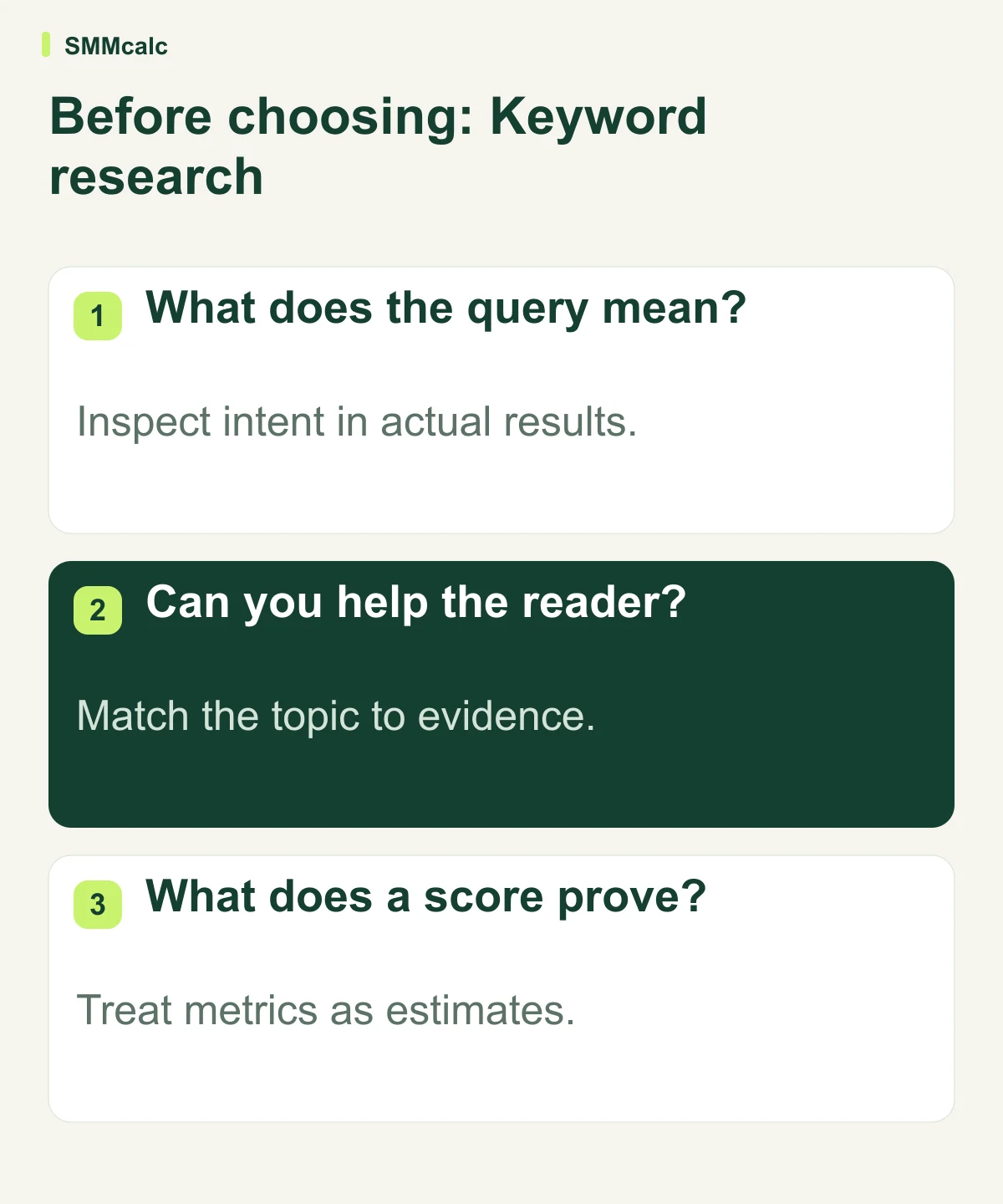
Read the query as a request for help, then inspect the actual search results to see what kinds of answers appear relevant. A buying comparison, a definition and a troubleshooting question can share vocabulary while needing different pages. A volume figure alone does not resolve that distinction.
Ask whether your organization can produce a useful answer and support its important claims. A phrase can attract apparent demand while remaining a poor fit for your services or expertise. Rejecting that topic is a useful research decision, even if it makes the spreadsheet smaller.
Treat metrics as estimates, not instructions
Difficulty, traffic and search-volume estimates can help organize investigation. They do not tell you an exact backlink requirement or guarantee a ranking. Compare the context behind a score with the actual results and the page you can realistically create.
- Identify the intent and the reader’s next decision.
- Inspect the results and note what the existing pages explain.
- Look for a useful contribution you can support.
- Use estimates to prioritize research rather than promise an outcome.
A hypothetical topic-selection decision
Hypothetically, a service business compares two related queries. It reviews the results, identifies different user needs and checks whether it can create a genuinely useful page for each. A tool helps organize those observations; the team rejects a high-volume phrase when its intent does not match the service or available expertise.
Evaluate tools with a small real topic set
SE Ranking, Mangools and NeuronWriter appear as candidates in the source. Inspect the currently supported functions and terms for the job you need before comparing plans. A tool aimed at research, monitoring or content analysis should be assessed on that actual task rather than treated as interchangeable.
Run the same small topic set through the options you already have. Record what additional decision each candidate enables and whether you can interpret the output. A larger collection of metrics is not automatically a better explanation of which page to improve next.
Pay for a concrete research limitation
Try a small topic set with the tools already available and compare the decisions produced. Pay for additional research capabilities only when they resolve a concrete limitation; do not treat a predicted ranking as a purchasing justification.
Inspect the current product details before choosing: SE Ranking, Mangools, NeuronWriter.
