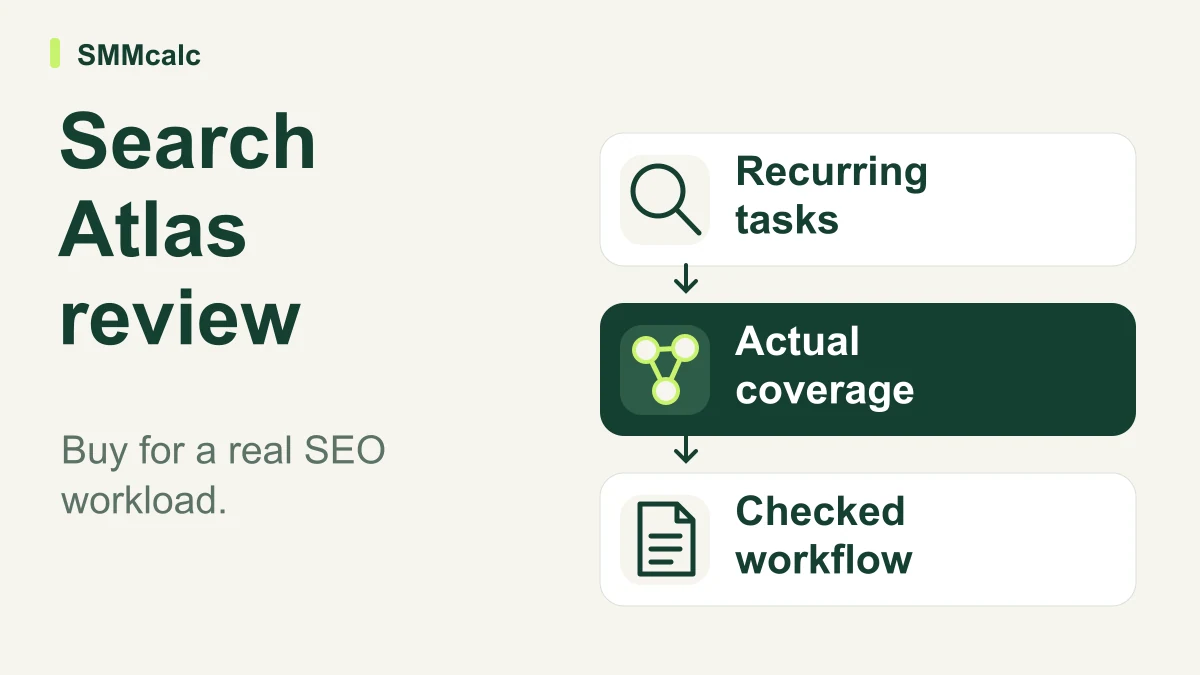
Search Atlas is worth evaluating when a recurring SEO workload can make use of its documented scope. The decision is whether the required tasks become easier to perform and check, not whether a large bundle sounds more complete or promises to handle an entire search strategy automatically.
Inventory the work before the software stack
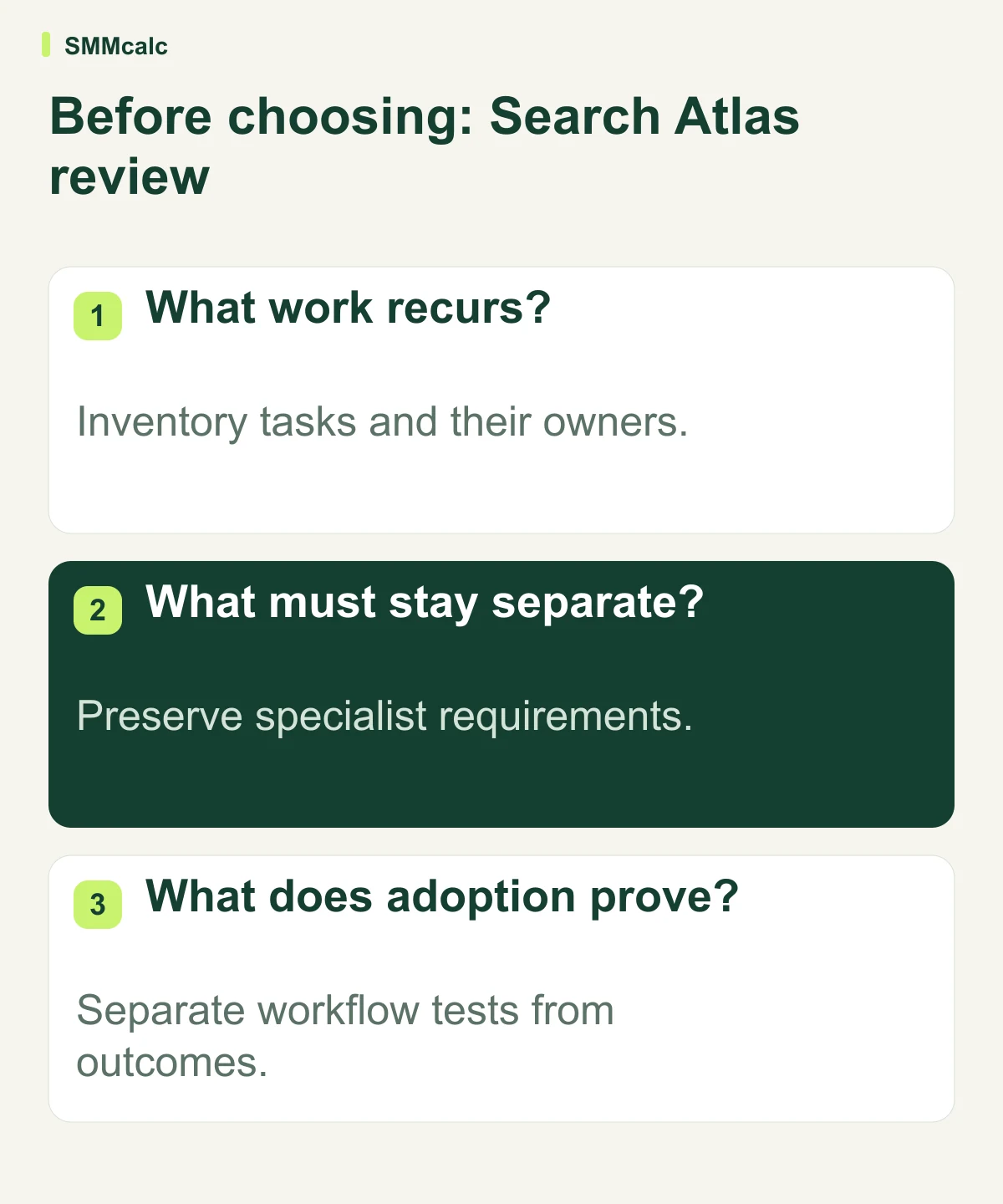
List the research, monitoring, content, reporting and implementation tasks the team actually performs. Include who owns each task and what output is needed. A platform is easier to assess against that inventory than against an imagined collection of every tool on the market.
Mark the requirements that are specialist or difficult to migrate. Consolidation can still be useful when some work remains separate. Do not count an existing subscription as replaced until its required function is genuinely covered by the proposed process.
Inspect documented scope without adopting marketing outcomes
The current Search Atlas site presents a broad platform and OTTO implementation workflow. That supports investigating those capabilities; it does not establish that every site will improve, that every existing tool is redundant or that a vendor savings estimate matches your operating costs.
- Choose a representative recurring task.
- Verify the required current access and account terms.
- Inspect review and implementation responsibilities.
- Include checking, migration and any parallel work in the comparison.
Choose the amount of platform you can actually use
A team managing several defined workflows has a different requirement from a single site needing an occasional report. Compare narrower candidates when the task is narrow. The source’s old prices, trial entitlements and claims about competitors are not a reliable current ranking.
Keep outcome expectations separate from tool adoption. A successful workflow test can show that work is easier to perform and verify. It cannot promise rankings, traffic or the value of every automated change. Buy for a process you understand rather than a fear that delaying the subscription guarantees falling behind.
A hypothetical agency workload check
Hypothetically, a small agency chooses one client reporting task and one bounded page-change process to evaluate. It records which existing work the platform supports and which still needs another tool or specialist. A subscription is considered only after the complete recurring workflow is clearer than the previous arrangement.
The practical next step
Compare one representative recurring workflow with the current Search Atlas offering and terms. Choose it when the required work fits and remains inspectable; keep a narrower route when consolidation mainly adds unused functions or unsupported expectations.
Compare current product information before choosing: Search Atlas, SE Ranking, Mangools, NeuronWriter.