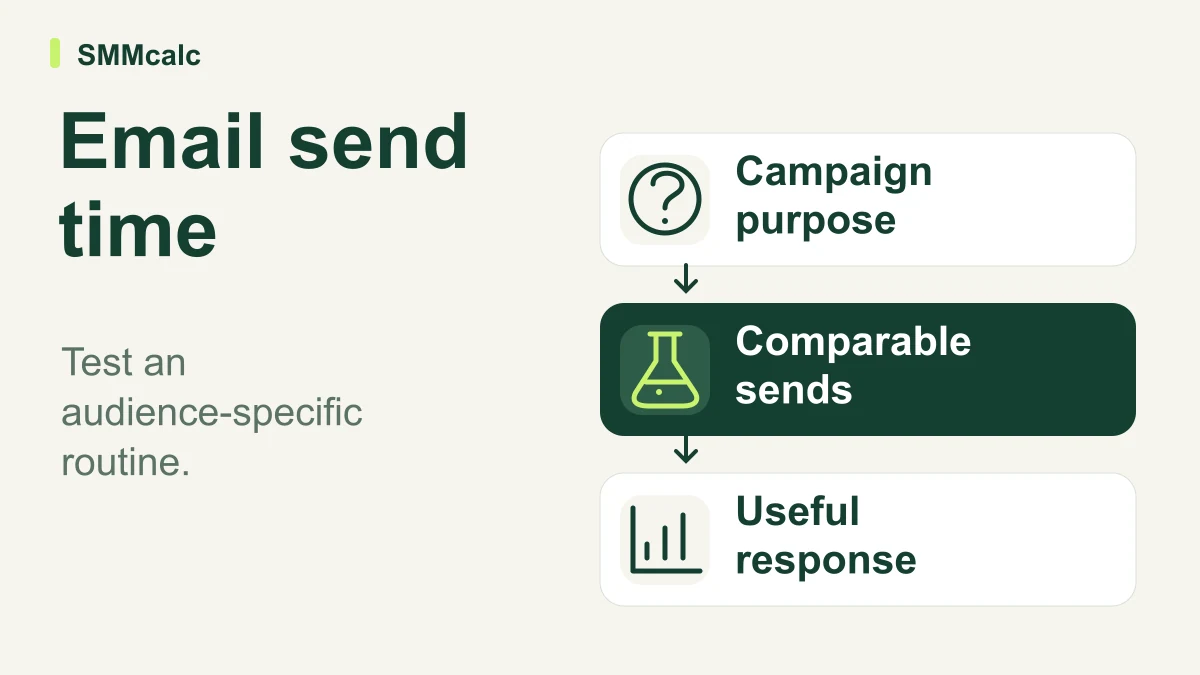
A useful email send time depends on the recipients, message and purpose of the campaign. Treat timing as a testable scheduling choice, not a guaranteed remedy for weak response; compare relevant outcomes while keeping the offer and audience differences visible.
Define the response before the sending window
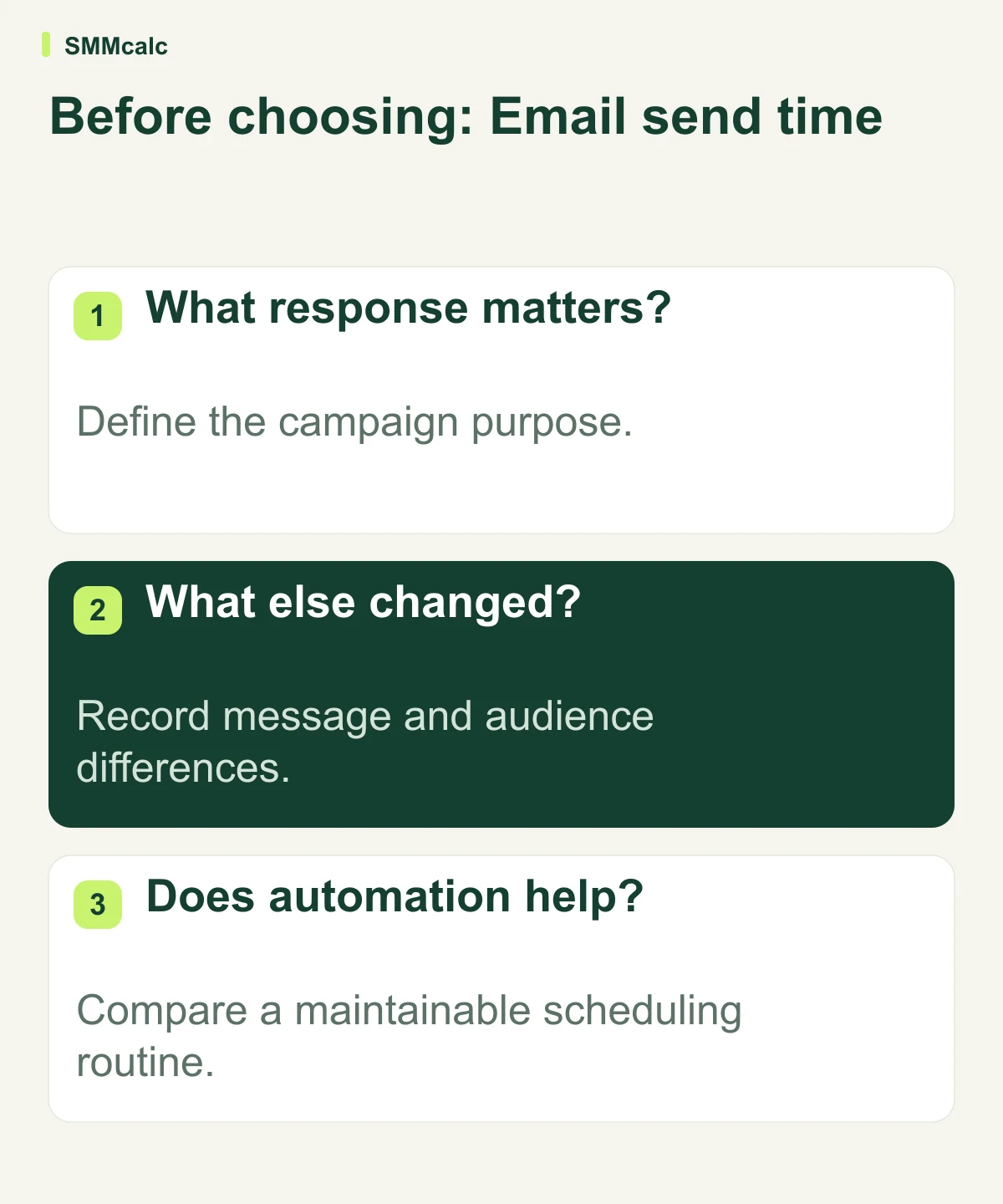
Write what the email should help a recipient do. A useful visit, reply or other relevant action is a different objective from a casual interaction. Decide how you will inspect the campaign before looking for a day or hour that appears successful.
Keep audience and content context alongside the result. Different offers, unusually timely subjects and changes in recipients can influence response. A calendar comparison is easier to interpret when those differences are recorded rather than attributed automatically to send time.
Run a modest comparison you can explain
Choose a small set of practical windows and maintain a recurring format where possible. Avoid changing the entire campaign at the same time. Repetition does not eliminate every uncertainty, but it gives the team a clearer basis for the next scheduling choice than a single impressive issue.
- Name the intended audience and campaign purpose.
- Record the content and relevant differences.
- Use a consistent reporting basis.
- Treat the result as evidence for the next choice, not a permanent rule.
Where scheduling software belongs
Brevo is the candidate emphasized in the source. Verify the currently available timing feature, required plan and account conditions before relying on it. The inherited daily allowances, prices and claim that only a few campaigns guarantee enough information are not retained as current facts.
Compare automated scheduling with a simple routine the team can maintain. A feature may reduce coordination work without proving a higher response. Keep deliverability, message relevance and recipient expectations in view rather than presenting timing as the single cause of campaign performance.
A hypothetical recurring-newsletter test
Hypothetically, a newsletter operator compares two planned sending windows for similar recurring issues. She records the audience, content and intended response before reviewing results. An unusually strong topic is treated as context rather than proof of a winning time, and any automation is evaluated against the routine she can actually maintain.
The practical next step
Start with a documented sending routine and the reporting you already have. Evaluate Brevo’s currently supported timing features only for a concrete workflow need; do not infer a universal best hour or guaranteed improvement from an AI label.
Compare current product information before choosing: Brevo, Omnisend, Moosend.