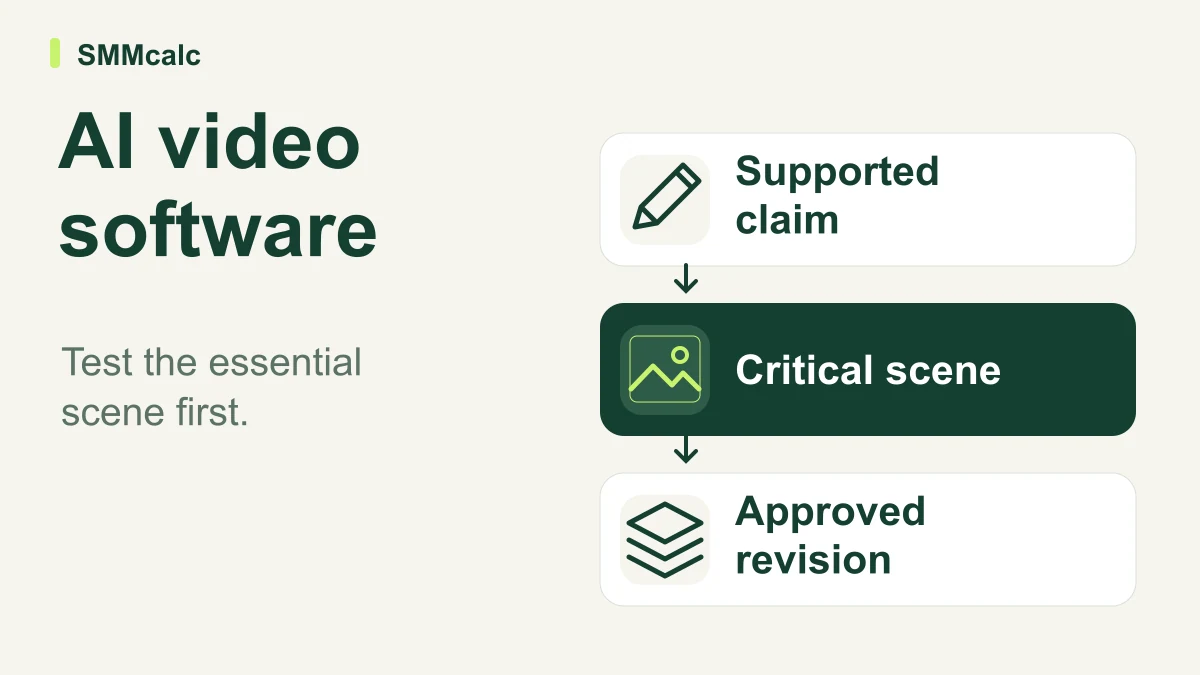
AI video software should be evaluated on the scene your message depends on, not only the easiest attractive example. Define what must be accurate, test a realistic correction and inspect the final sequence before treating a generated draft as finished production.
Name the claim before the creative style
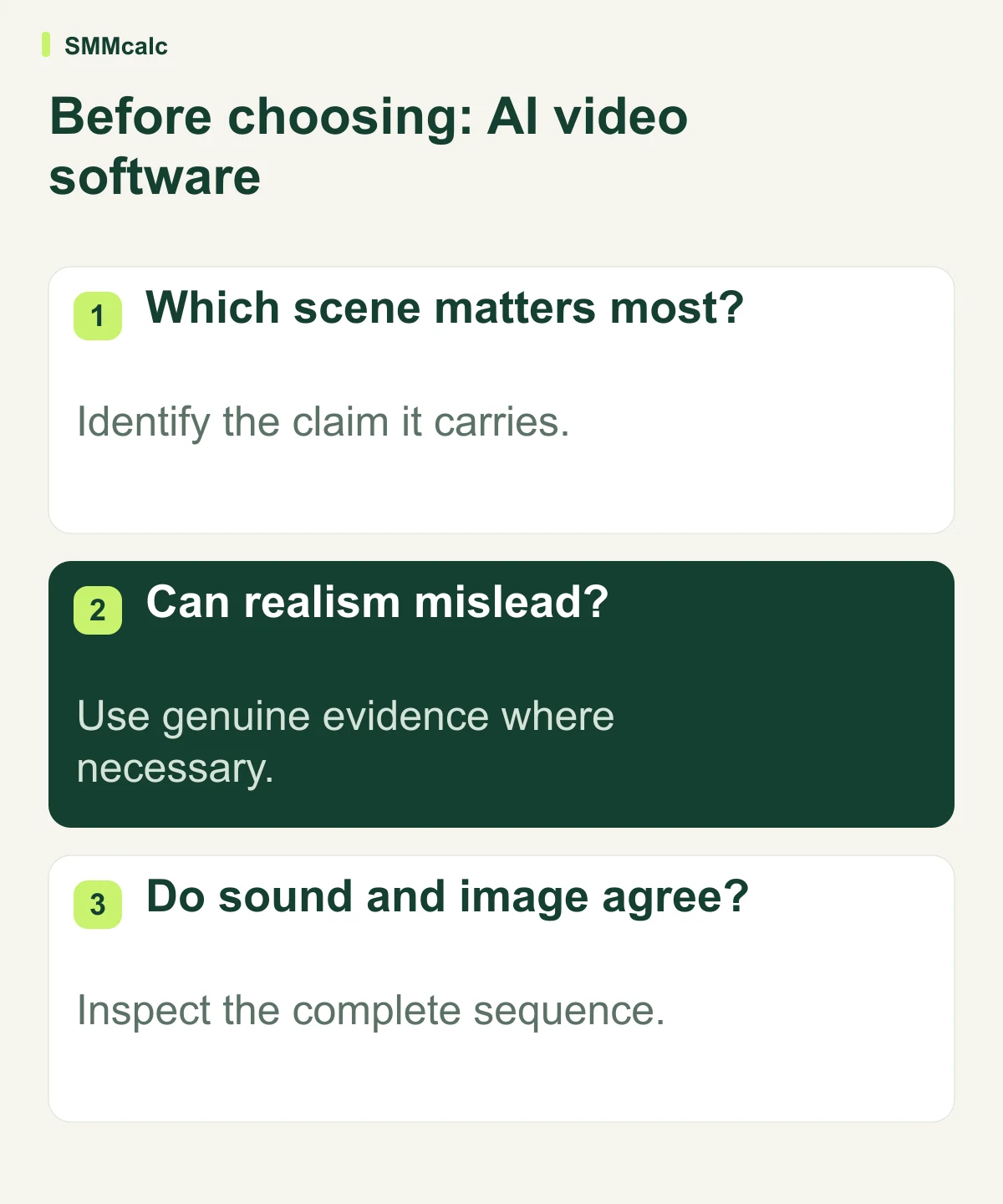
Write what the viewer should understand and which scene establishes it. A product demonstration, conceptual explanation and synthetic presenter have different truthfulness requirements. Decide which material needs to remain authentic before choosing the visual treatment.
Treat illustrative realism carefully. A scene can look convincing while implying a product action, event or customer experience that never occurred. Use a clear diagram or authorized real material when accuracy is more useful than a dramatic invented sequence.
Check the complete explanation
Listen to the narration while inspecting the visual sequence. Names, qualifications and the relationship between scenes matter as much as individual frame quality. Review again after revisions, because a change to the opening can alter the implication of the rest.
- Use a brief with supported factual claims.
- Identify protected subject details and must-keep evidence.
- Correct one scene and inspect continuity.
- Verify the actual account and final delivery conditions.
Compare the work between draft and approval
The source contains multiple product claims and broad comparisons that do not establish a current universal winner. Verify the relevant capabilities directly. Do not assume every paid tier has the same resolution, every beginner can finish in fifteen minutes or every traditional editor requires the same manual work.
Record preparation, revision and final review as part of production. A useful first draft can still leave substantial work. Choose according to the complete process at your quality standard, without converting a marketing demo into a guaranteed labor saving.
A hypothetical essential-scene test
Hypothetically, a company needs a short explanation of a product process. It tests the scene showing the key step, checks whether the narration agrees with the visual and introduces one correction. A beautiful opening does not rescue the candidate if the essential demonstration remains inaccurate or impractical to fix.
The practical next step
Evaluate the highest-importance scene and a realistic revision before choosing a plan. Keep the candidate only if the approved workflow fits; avoid a purchase based on assumed model quality, universal export limits or guaranteed production speed.
Compare current product information before choosing: InVideo, Pictory.