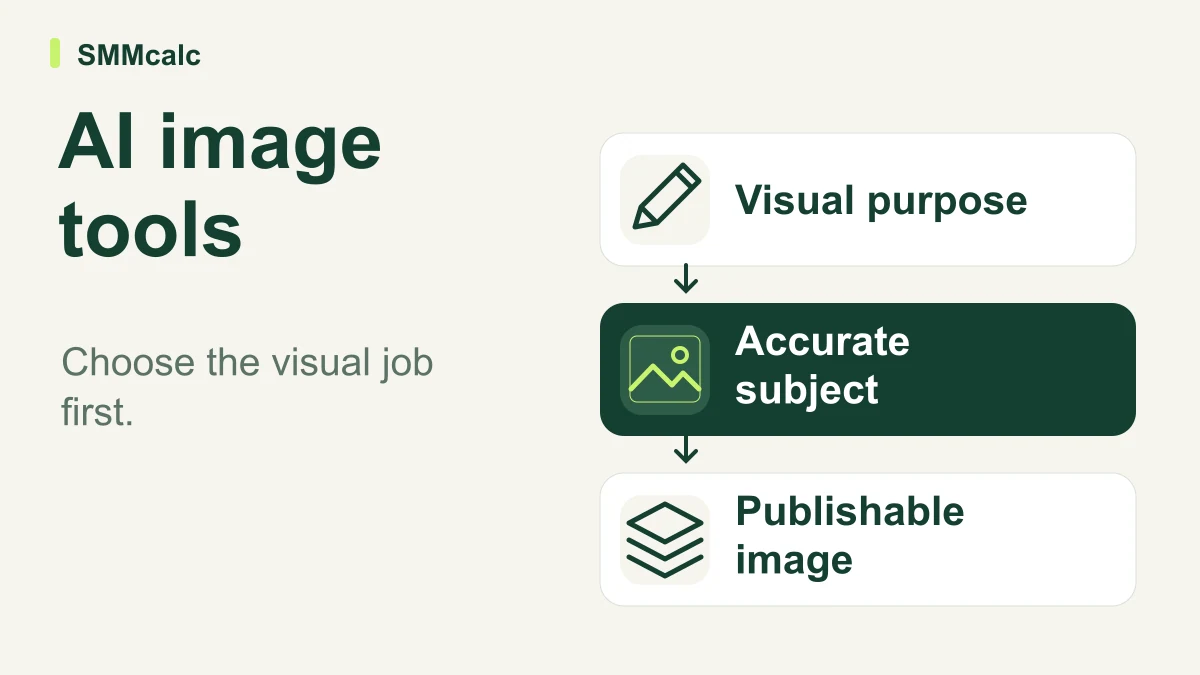
AI image tools should be compared within the visual job you need done. Creating a conceptual illustration, correcting an existing asset and producing a portrait involve different standards; choose the task and acceptable representation before comparing a broad suite with a specialist product.
Set the standard for the intended image
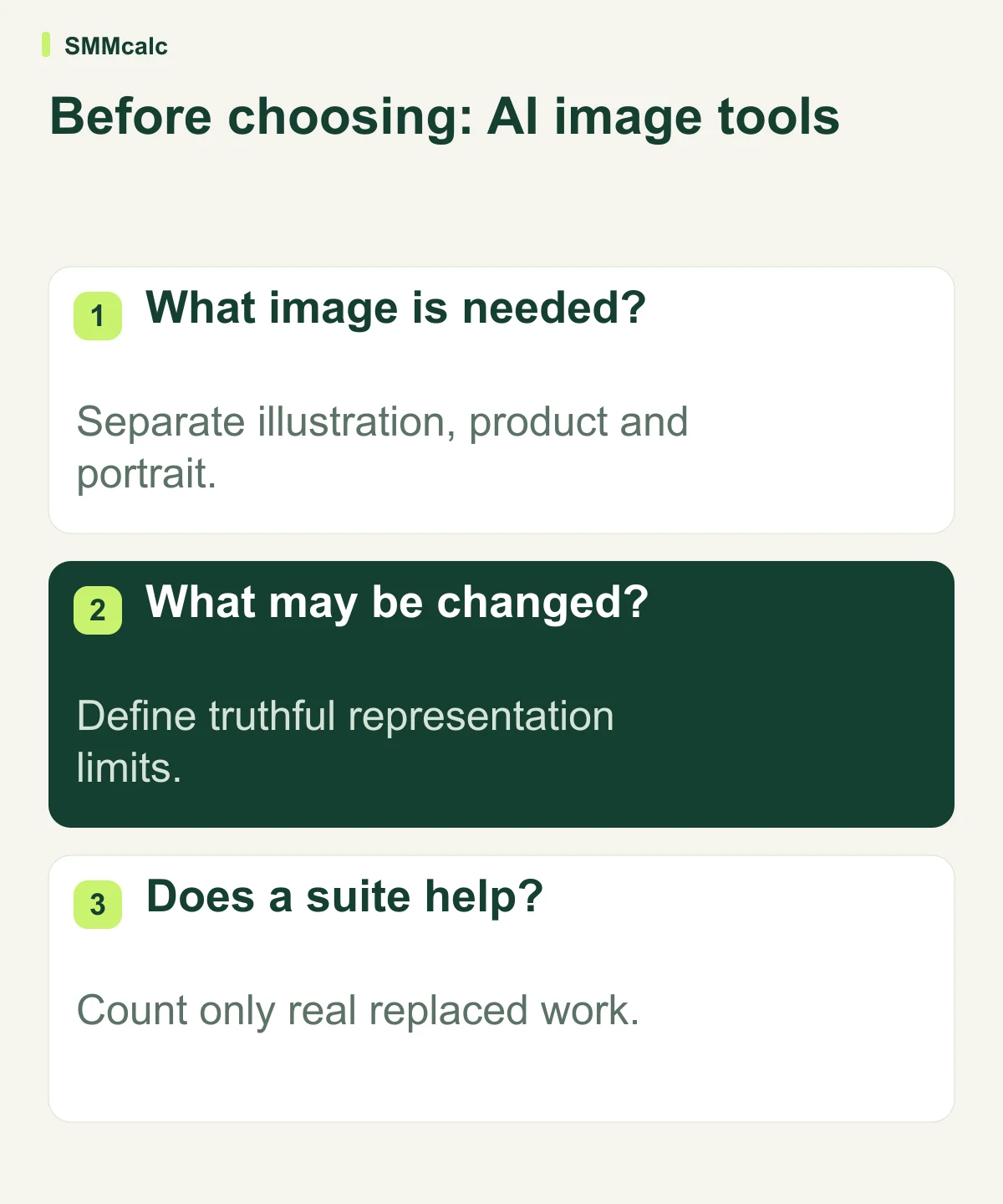
A conceptual illustration can communicate an abstract idea without pretending to be documentary evidence. A product image must preserve the details a buyer relies on. A portrait raises a separate question about whether the represented person and intended use are authorized and accurately understood.
Describe permitted changes before generating or editing. This makes approval more concrete than asking whether the image looks professional. A polished result should still be rejected when it communicates a factual claim the source cannot support.
Evaluate the task rather than a universal best-tool list
The source discusses several image products, including Simplified and BetterPic. Check the currently supported workflow, output conditions and terms for the specific job. Do not infer that an artistic reputation establishes suitability for accurate product editing or that a portrait offer fits general image production.
- Use authorized inputs and a clear visual purpose.
- Identify details that must remain accurate.
- Inspect the result at its real publication size.
- Include revision effort and rejected output in the comparison.
Choose a suite only when the wider work is real
A combined workspace can be worth investigating when the team genuinely needs several connected tasks. Count only services and work that it actually replaces. Do not justify a recurring bill by imagining subscriptions you never planned to buy.
Retain a simpler route for occasional or narrow tasks. Avoid guaranteed studio-quality, flawless-portrait, first-week-payback and immediate-results claims without evidence. The useful outcome is an image that meets the brief truthfully and can be published under the applicable permissions.
A hypothetical two-image brief
Hypothetically, a marketer needs one conceptual article illustration and a corrected product photo. She evaluates them separately: the illustration must communicate the idea honestly, while the product edit must preserve real details. She rejects a single-suite purchase if it only handles one task acceptably and adds unnecessary recurring cost.
The practical next step
Compare the relevant task with your actual assets and requirements. Evaluate Simplified, BetterPic or another candidate under current terms; choose a specialist or an existing workflow when a broader suite adds no useful capability.
Compare current product information before choosing: Simplified, BetterPic.