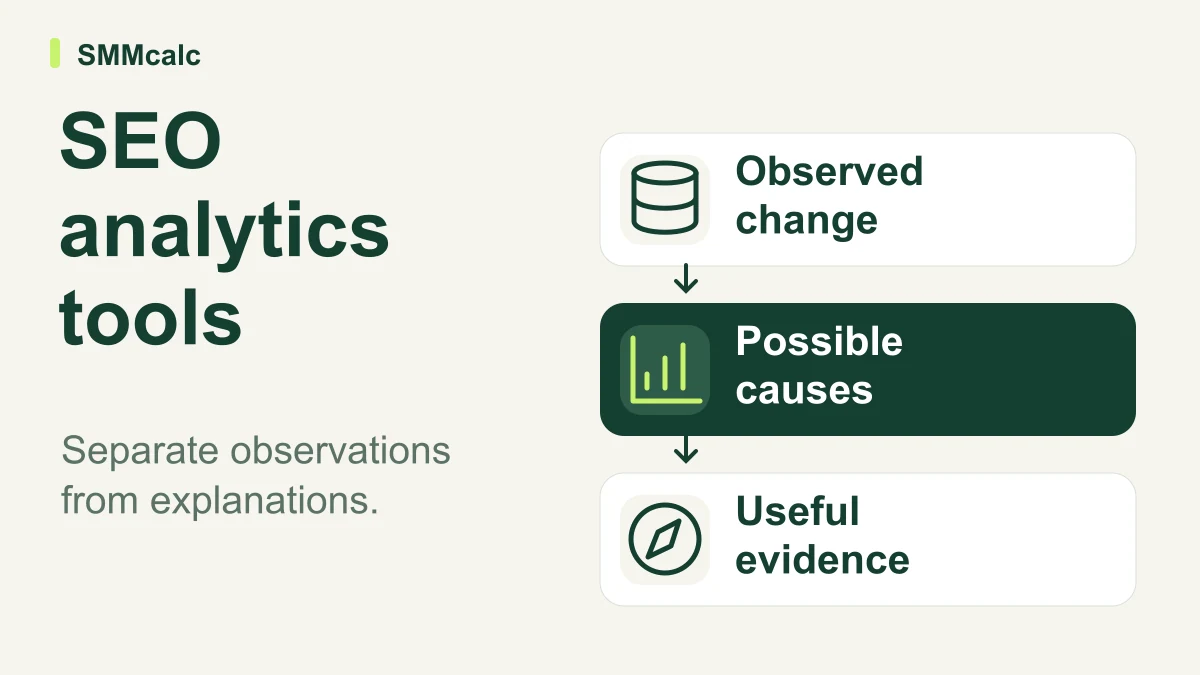
SEO analytics should help you investigate a defined change rather than declare an automatic explanation. Separate what the data shows from what you think caused it, then evaluate whether a tool adds evidence you can interpret and use in a practical decision.
Write the observation before the explanation
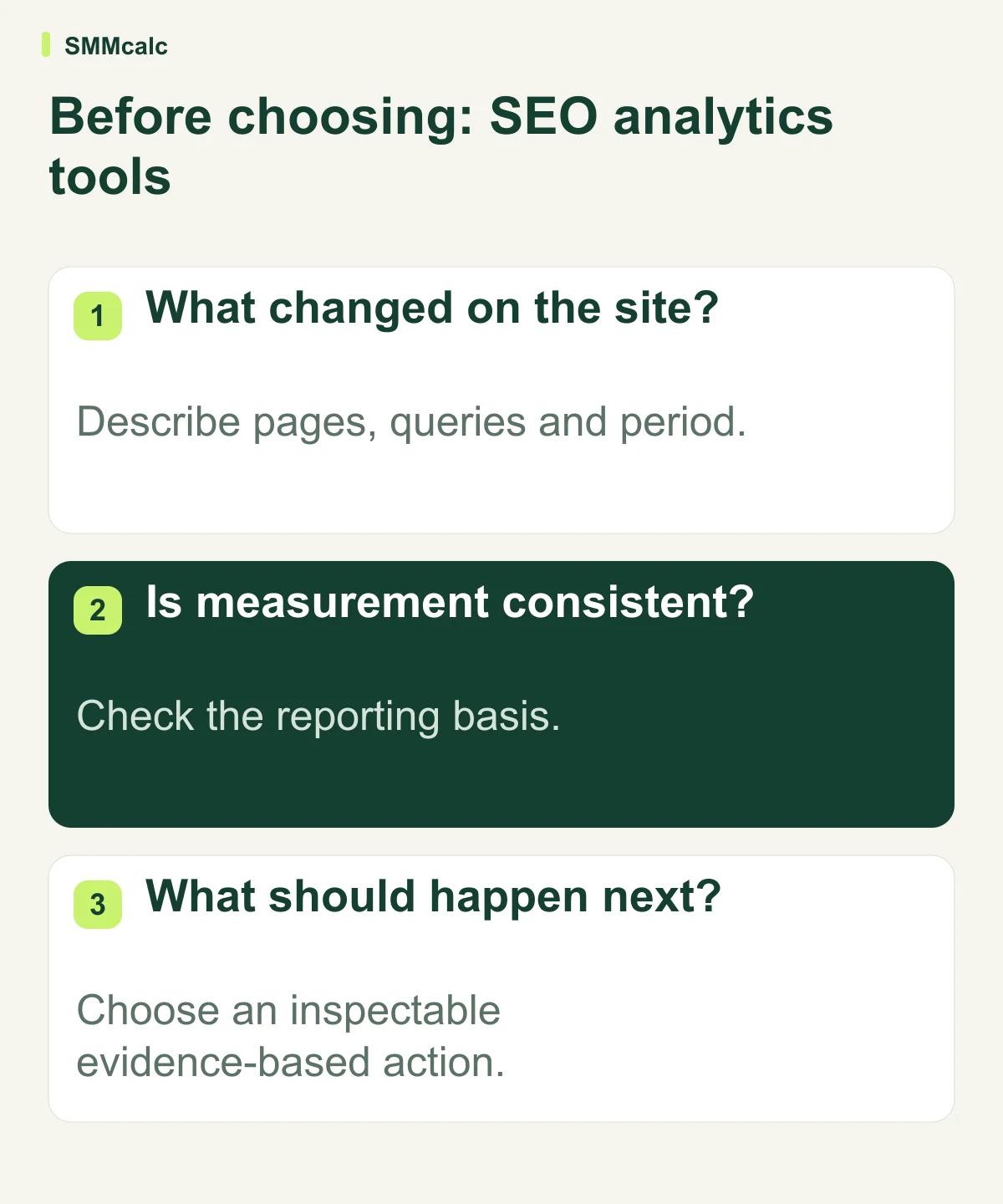
Describe which pages, queries or outcomes changed and over what period. Keep that description separate from the theory about why it happened. An alert can identify a place to investigate without proving that a technical issue or competitor action caused the result.
Check whether the comparison uses the same measurement basis. A change in tracking, filters or page grouping can alter a report without reflecting the same underlying business change. Record those differences before treating a chart as a diagnosis.
Ask what a new tool would contribute
The source discusses SE Ranking, Mangools and NeuronWriter, but those names should not be treated as interchangeable answers to every analytics question. Verify the current functions and data you actually require. A research estimate and an observed site report serve different purposes.
- Define the affected pages and period.
- Check measurement and comparison consistency.
- Write a small set of explanations that could fit the observation.
- Identify what evidence would support or weaken each explanation.
Turn reporting into a bounded next action
Choose a useful action you can inspect, such as checking the affected page group or correcting a confirmed issue. Do not assume a software score identifies every cause or that an automatic recommendation is appropriate for the site. Preserve the reasoning behind the decision.
Compare the effort of collecting, interpreting and communicating the evidence. A simpler report that answers the question can be more useful than a broad dashboard the team cannot explain. Avoid a paid-tool decision based solely on a promise of automatic fixes or guaranteed recovered rankings.
A hypothetical traffic investigation
Hypothetically, a site owner notices fewer visits to a group of pages. She checks the dates, affected pages and measurement continuity before comparing candidate explanations. A new tool earns a place only if it adds useful evidence to that investigation rather than another unsupported score or automatic recommendation.
The practical next step
Start with the diagnostic question and the evidence already available. Evaluate SE Ranking or another candidate only for a concrete gap, using current functions and terms rather than assuming more reports guarantee a useful answer.
Compare current product information before choosing: SE Ranking, Search Atlas, Mangools, NeuronWriter.