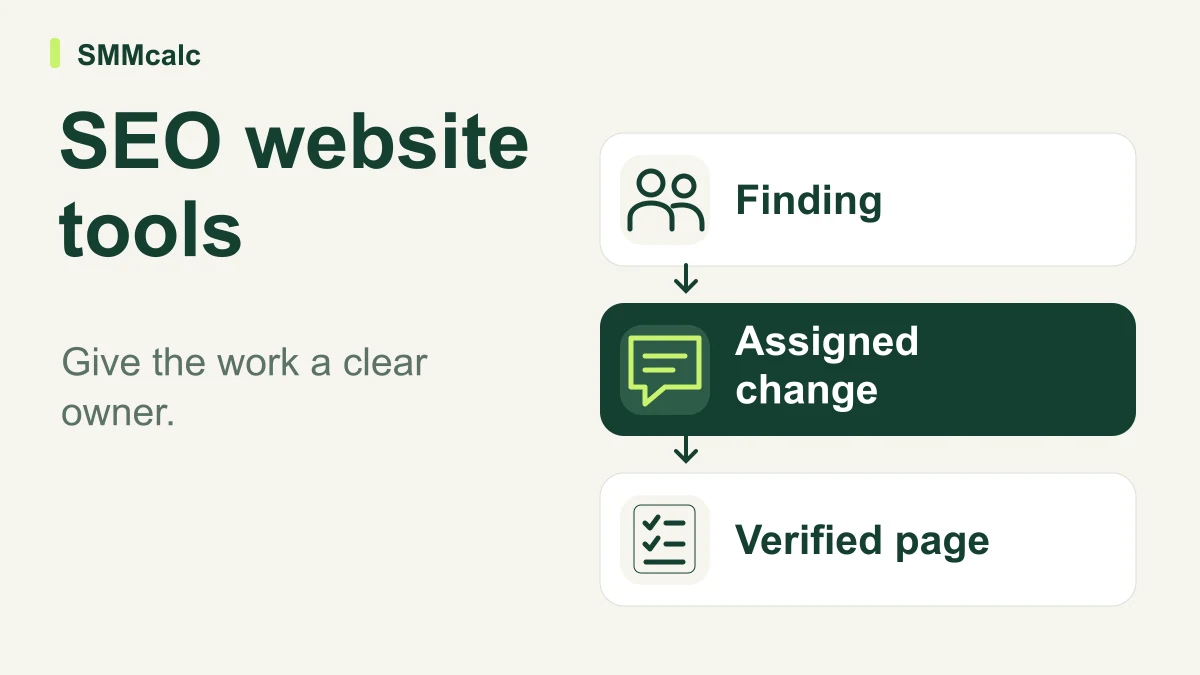
An SEO website tool should fit the way work is assigned, completed and checked. Research, monitoring, content changes and technical implementation are related tasks, but one dashboard does not make them the same job or remove the need for a responsible owner.
Separate findings from completed improvements
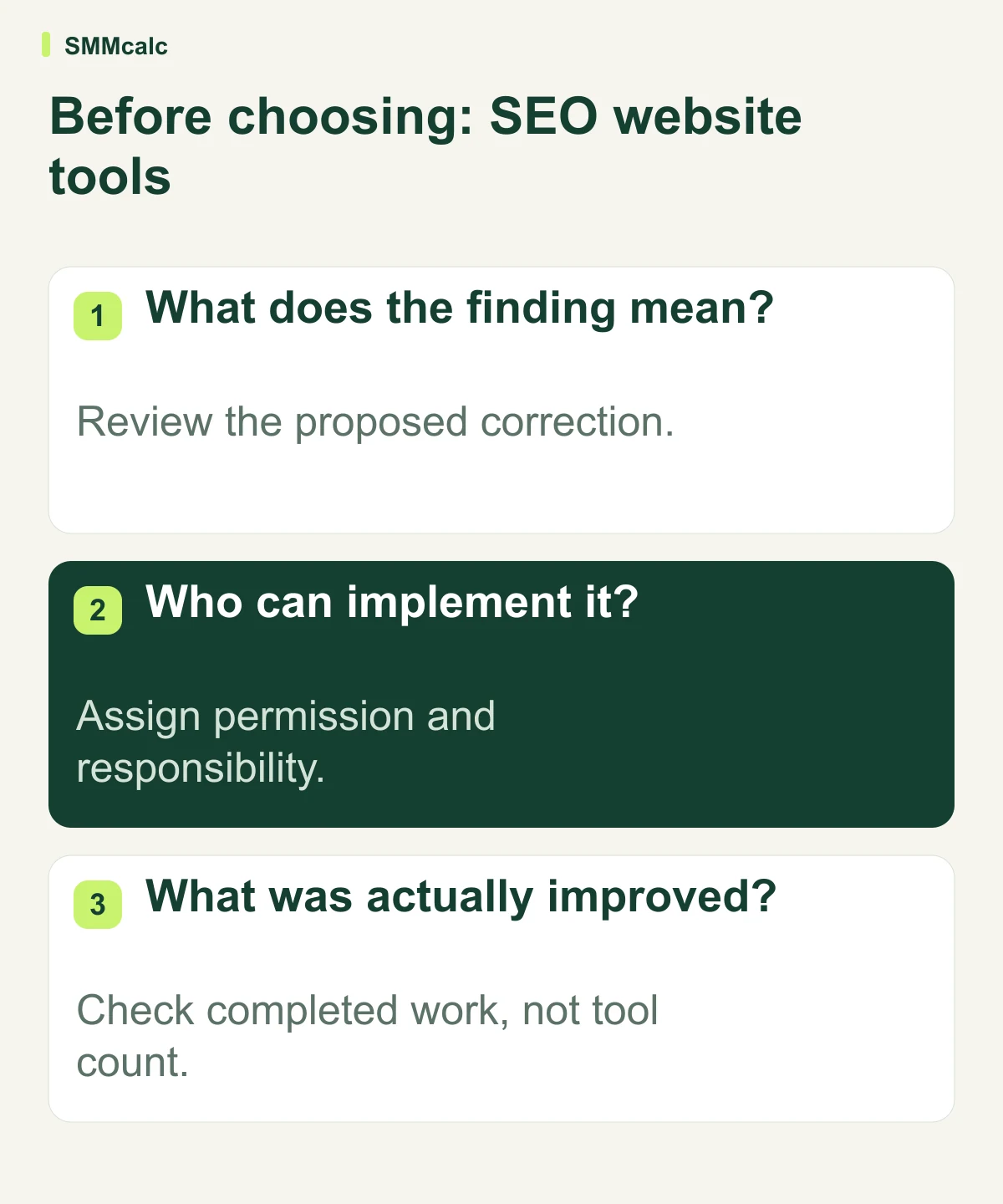
A report can identify a place to investigate without proving the right correction. Someone still needs to decide whether the finding applies, what change is appropriate and how it fits the page. Treat that reasoning as part of the work rather than an inconvenience software should hide.
Identify who has permission and skill to make the change. A content editor, developer and business owner may have different responsibilities. A clear handoff can be more useful than placing all of them inside one interface without agreed ownership.
Test an end-to-end task
Choose a confirmed issue that the team understands and can inspect. Record the starting page, intended result and verification step. Check whether the proposed tool helps preserve that context as work moves between people.
- Define the finding and the evidence behind it.
- Assign interpretation and implementation separately when needed.
- Keep the intended change visible to the next person.
- Inspect the published page before calling the task complete.
Count only the work the tool actually supports
The inherited source emphasizes broad SEO bundles and includes repeated trial and pricing sections. Those claims do not establish a current plan guide. Verify the required functions and permissions directly rather than assuming a platform replaces every research, writing or technical tool.
Keep a separate specialist route when it serves a real requirement. A unified workflow can be useful without universal consolidation. Include review, implementation and checking in the comparison instead of accepting automatic fixes, guaranteed rankings or an immediate subscription-payback claim.
A hypothetical audit-to-change handoff
Hypothetically, a site owner receives an audit and assigns one confirmed issue to the person who can correct it. The team records the intended change and checks the page after implementation. A tool is useful if that handoff becomes clearer, even if some specialist work remains outside the dashboard.
The practical next step
Map one SEO task from finding to verified implementation before buying a unified platform. Choose the current tool that supports the handoff you need; avoid guarantees that a bundle removes all manual work or creates consistent rankings.
Compare current product information before choosing: Search Atlas, SE Ranking, InLinks.