
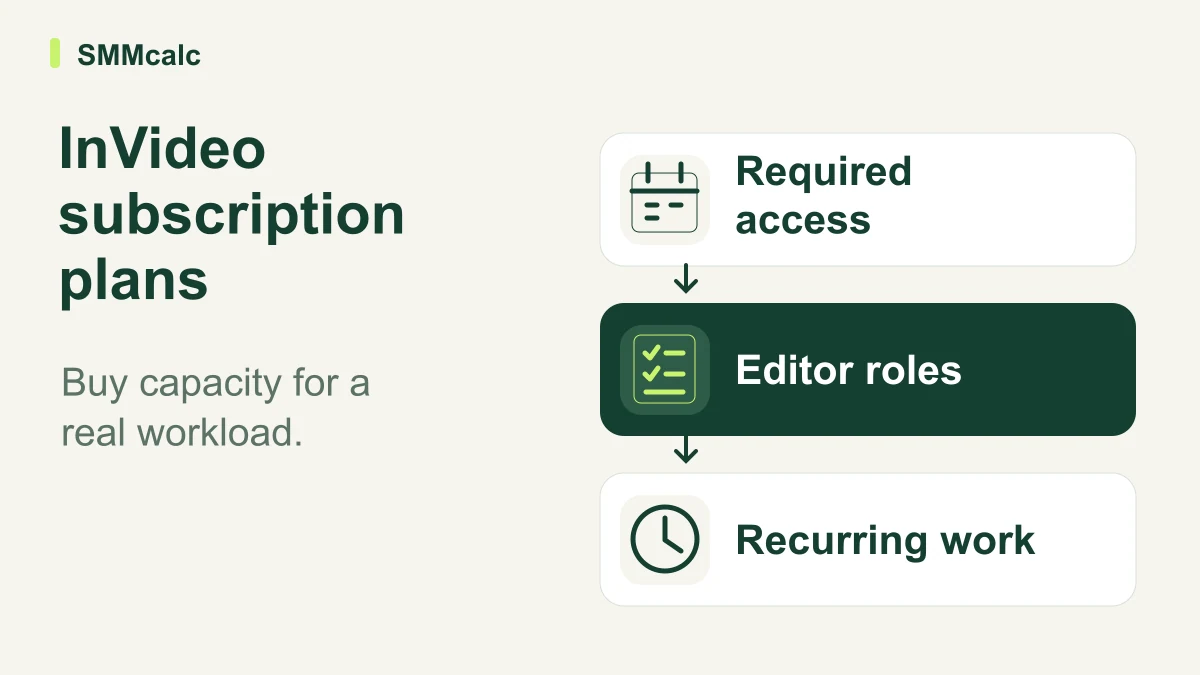
Choose an InVideo AI subscription by the work it must support, not by the largest discount or credit number. A plan can have ample credits and still be the wrong purchase if it lacks an essential capability, assigns the wrong roles to collaborators or commits you to capacity you will not use.
This guide addresses plan fit: who needs access, which work should be automated and what recurring allowance is justified. A cost-per-video estimate is useful later, but it cannot repair a plan that fails the basic requirements.
Separate access requirements from production volume
Start with a list of essential capabilities for the actual project. Include any model, output requirement, stock allowance, storage need or collaboration feature you rely on. Then compare that list with the selected plan’s current details rather than assuming every tier offers identical access.
Record how many people need to edit, who only reviews work and whether guests need a particular permission. A guest allowance and a paid editor seat are different line items; do not infer that either includes all the other’s rights. Confirm the distinction in the account and checkout before budgeting for a team.
The current pricing page differentiates its plans by more than total credits. That makes a requirements checklist more dependable than an old comparison that treats paid tiers as the same product with different generation minutes.
What the listed plans mean for your shortlist
The official page currently lists Starter, Plus and Max. Use the table below as a way to investigate those choices, not as a substitute for live allowances and checkout terms. Plan names, included models and offers can change.
| Plan to inspect | Question that earns it a place | Reason to reject it |
|---|---|---|
| Starter | Does it include every essential capability for a small, defined workload? | A required model, permission or allowance is missing. |
| Plus | Does the additional access or capacity solve an observed constraint? | The higher allowance is justified only by an optimistic publishing forecast. |
| Max | Is there a repeatable workload that needs this recurring capacity? | Most work is occasional or the lower tier already supports it. |
Review the available plan details against your checklist before purchase. The appropriate next step is to inspect access and terms; no specific trial duration or special offer is assumed here.
Distinguish manual work from chargeable AI work
InVideo’s billing documentation distinguishes manual timeline editing from AI agent work and media generation. That is a meaningful planning distinction. A workflow with careful manual corrections can have a different credit pattern from one that repeatedly delegates revisions to an agent.
Do not turn finished-video duration into an automatic estimate of credit demand. Model choice, generation settings and the work requested can affect consumption. Learn the usage pattern of representative projects before translating a monthly allowance into a publishing commitment.
Include rejected generations and revisions in that observation. Their cost still belongs to the production process even when none of the result appears in the final export. An allowance that covers ideal first attempts may not cover your actual approval standard.
A hypothetical team-planning exercise
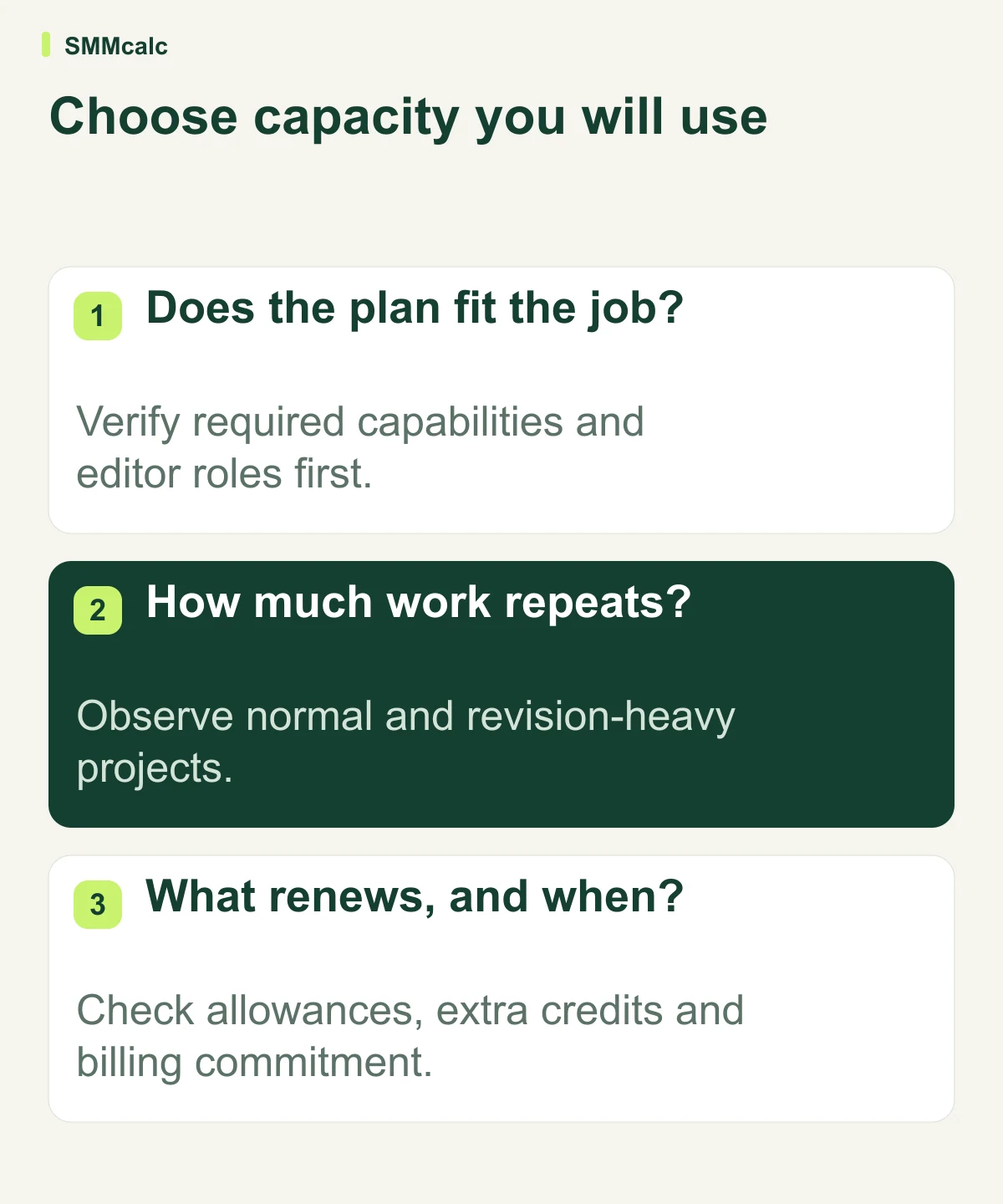
Imagine a small agency with one person editing client videos and two people reviewing drafts. It expects a mix of supplied-footage cuts and occasional generated scenes. Its first task is to verify which roles each person requires, rather than purchasing three identical seats by habit.
Next, the agency tests one normal project and one revision-heavy project. It records the essential features, active editors, AI usage and work completed manually. The subscription decision follows that observed range instead of a client pipeline that has not yet materialized.
Finally, the agency considers whether this work repeats steadily. A busy launch month does not by itself justify the same allowance throughout a year. Separate sustained demand from occasional peaks before choosing a billing commitment.
Assign someone to review the subscription after the first normal production cycle. Compare the allowance used with approved work delivered, and note whether access limits actually blocked a project. That gives the next plan decision a concrete basis instead of allowing an optimistic estimate to become a permanent recurring purchase.
Check renewal, top-ups and commitment separately
InVideo says unused included credits do not roll into the next month. Its help documentation also describes separately purchased extra credits and plan changes. Read those terms as distinct mechanisms; buying an allowance, adding credits and upgrading a subscription need not have identical conditions.
Before paying, write down the recurring charge, billing period, renewal timing, included allowance and the effect of cancellation or downgrade. Verify whether the displayed monthly figure is billed monthly or represents an annual commitment. Treat a temporary offer as a checkout term rather than a permanent feature.
When a broader subscription is unnecessary
If the only job is converting a prepared script into a video, include Pictory in a focused workflow comparison. It offers a written-content route, but whether it is cheaper depends on the plan and workload you actually require. Do not assume a narrower positioning guarantees a lower total bill.
Simplified is another option to investigate if video is one part of a wider marketing workflow. Compare the tools you would genuinely replace, not an imaginary stack of subscriptions that you do not currently pay for.
Keep InVideo AI on the shortlist if its combination of editing, access and allowance fits a repeatable job. Use the official plan-and-credit explanation to verify the mechanics before choosing a term.
Check the current subscription options after completing the checklist. Choose the smallest plan that passes essential requirements with realistic headroom, and revisit the decision when observed demand changes.
